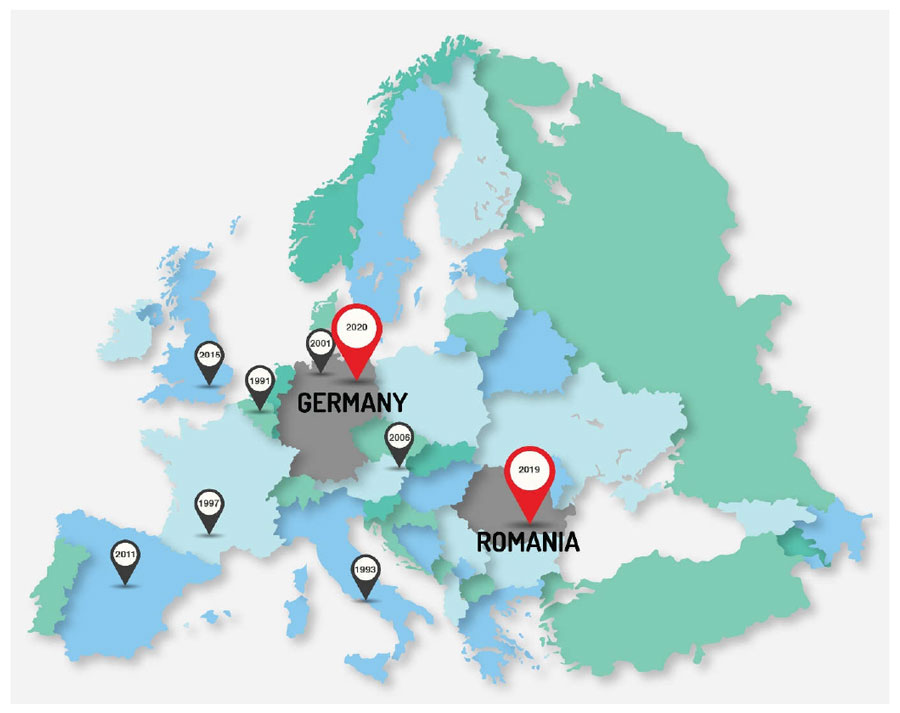
Aerospace leaders from across Europe descended on Warsaw in May 2025 for Aerodays – the European Aeronautics Days – returning in full force as an in-person event after years of pandemic disruption.
The three-day conference (May 7–9, 2025) marked the first time Poland hosted this prestigious forum on aviation’s future. Under the banner “Europe leading the sky: Sustainability and Competitiveness of Aviation in a Changing World,” Aerodays 2025 convened over a thousand participants – from CEOs and EU officials to researchers, startups and students – to showcase breakthroughs in green and digital aviation and to chart the industry’s course through new global challenges. In the cavernous halls of Warsaw’s EXPO XXI center, the atmosphere crackled with optimism. Jet engines and futuristic aircraft models gleamed in exhibition booths, while on stage experts debated how to achieve net-zero flight, harness artificial intelligence, and ensure Europe’s aviation sector thrives in a turbulent world.
Europe Leads the Sky: A Landmark Event in Warsaw
For Poland, hosting Aerodays was a moment of pride – and a signal of how integral the country has become in European aerospace. “Hosting Aerodays is a great honor for us and a sign of trust from the European Commission,” said Dr. Sylwester Wyka, acting director of Łukasiewicz–Institute of Aviation (the research institute that co-organized the event). He noted that having the continent’s top aviation experts meet in Warsaw “is proof that our country’s aviation sector plays an important role in European programs, consortia and discussions on the future…”. Backed by the Polish Presidency of the Council of the EU (which held office in early 2025), Aerodays 2025 was deliberately positioned as a science-business summit that could influence policy. Indeed, Wyka emphasized that the conference’s conclusions would help shape EU support for aeronautics R&D in the next European Framework Programme.
The scale and scope of Aerodays 2025 reflected a rapidly evolving industry. Over 7 high-level plenary sessions and 20 parallel workshops, attendees explored topics ranging from sustainable fuels and hydrogen propulsion to artificial intelligence in air traffic management. The conference program was packed with forward-looking themes: “A new European aviation research agenda,” “Artificial intelligence, digitization, autonomy,” “Strategic autonomy and security,” and more. In the hallways, one could hear a mix of languages and perspectives. Major aerospace companies like Airbus, Boeing, GE, Safran, Rolls-Royce, Honeywell, Collins Aerospace (RTX) and others set up shop to display their latest tech – from hydrogen engine mockups to AI-driven cockpit systems. European research powerhouses were well represented too, including DLR (Germany), ONERA (France), INCAS (Romania), VZLU (Czech Republic), and many from the Polish Łukasiewicz network.
Crucially, European Union institutions and initiatives had a strong presence, underscoring the event’s policy heft. Officials from the European Commission’s DG Research & Innovation (RTD), DG Mobility & Transport (MOVE), and DG Defence Industry & Space (DEFIS) were on hand. Leaders from the EU’s big aviation research partnerships – Clean Aviation, SESAR (air traffic management), and Clean Hydrogen – spoke about their programs’ progress and future plans. The European Union Aviation Safety Agency (EASA) contributed its regulatory viewpoint on safely deploying new technologies. And organizations like ACARE (the Advisory Council for Aviation Research in Europe) and ASD (Aerospace and Defence Industries Association of Europe) ensured industry’s collective voice was heard. This multi-faceted lineup – part industry expo, part policy summit – gave Aerodays 2025 the feel of a strategic council of war (or in this case, peace) for aviation’s next chapter.
Setting the Course: Policy, Strategy and New Initiatives
From the outset, Aerodays 2025 struck a balance between showcasing technological marvels and grappling with high-level strategy. The opening session, on the morning of May 7, set the tone. Speaking on behalf of the Polish EU Presidency, Prof. Andrzej Szeptycki, a state secretary in Poland’s Ministry of Education and Science, welcomed delegates and stressed that Aerodays is “an important platform for exchange… bringing together representatives from diverse backgrounds, countries, and disciplines”. He expressed confidence that “the conclusions and solutions developed during the conference will contribute to shaping EU policies in supporting R&D” – not least to ensure countries like Poland fully benefit from European aviation programs.
Brussels was certainly listening. The European Commission sent top officials to underscore the bloc’s commitment to aerospace innovation. In a keynote address, Andrius Kubilius, speaking as European Commissioner for Defence and Space, delivered an upbeat message about Europe’s innovation momentum. “Innovation is crucial for competitiveness tomorrow,” he told the audience. Whether one is a startup or an aerospace giant, “you are masters of invention, using artificial intelligence, developing electric aircraft, hydrogen aircraft, turning a climate challenge [into an] opportunity for innovation. Your work is crucial for the future of Europe,” Kubilius affirmed. His remarks drew applause, encapsulating the conference’s spirit: that Europe’s push for greener air travel is not just an environmental imperative, but a chance to lead in high-tech industries.
The main theme of Aerodays 2025 – sustainability and competitiveness in a changing world – was woven throughout the agenda. One plenary session, moderated by a BBC journalist, took a 30,000-foot view of “trends and challenges” shaping aviation’s next decades. Panelists discussed the twin transitions facing the sector: the shift to a low-carbon economy and the parallel wave of digitization, dubbed the “twin transformation”. They frankly assessed hurdles from geopolitics (including the war in Ukraine and global trade tensions) to emerging cyber threats to aviation infrastructure. Maintaining Europe’s competitive edge in the face of new rivals – and ensuring energy supply and sustainable fuel scale-up – were also flagged as critical issues. The clear subtext was that Europe cannot take its historical leadership in aerospace for granted; it must innovate and cooperate more than ever to stay ahead.
A highlight of Day 1 was a session dedicated to envisioning the next European aviation research program – essentially brainstorming what the EU’s Framework Programme 10 (FP10) for 2028 and beyond might look like. In this panel, Axel Krein, Executive Director of the Clean Aviation Joint Undertaking, and Andreas Boschen, Executive Director of SESAR JU, shared the stage to present a unified vision (both also representing the new ARIS – Aviation Research and Innovation Strategy – initiative). They agreed on “the key role of the future research program for European aviation,” stressing that a clear, coordinated roadmap is needed to align research with industry needs, EU policy, and global trends. Europe, they argued, is at a turning point where it must simultaneously drive down carbon emissions, digitalize operations, boost industrial competitiveness, speed up aircraft production, and ensure security of supply – a monumental juggling act. The audience heard calls for the EU to craft a mission-driven program that knits these priorities together. As one expert put it, “stable and adequate funding” under the next framework will be crucial to enable the sector’s transformation toward sustainable and safe development in the face of dynamic geopolitical changes.
Flying Green: NetZero Goals and Climate Innovations
At the heart of Aerodays 2025 was the drive toward net-zero aviation – a mission that has only gained urgency since the 2020 forum. The second day (May 8) opened with a deep dive on the “green transformation” of air transport. The plenary began with an update on Europe’s decarbonization goals for aviation and the progress since 2020 in implementing the sector’s part of the European Green Deal, branded as the “Fly the Green Deal” initiative. Europe’s aviation industry and policymakers have coalesced around a 2050 net-zero target (mirroring the EU’s economy-wide climate neutrality law), and speakers in Warsaw detailed how far the sector has come – and how far it still has to go. They discussed a forthcoming Clean Aviation roadmap for 2030–2050, and the EU’s broader strategy to combine competitiveness with decarbonization under a new “Clean Industrial Deal”.
A candid assessment was given of the technological challenges in achieving full “Fly the Green Deal” implementation. The list is daunting: from overcoming battery energy density limits for electric flight, to mastering hydrogen propulsion and SAF (sustainable aviation fuel) scaling, to completely rethinking aircraft materials and architectures. Panelists noted that success will require not just technical ingenuity but also supportive policy – coordinated action across transportation, energy, environment, and even defense sectors. They called for strong public-policy support, including investments in research and demonstration, harmonized standards, and incentives, plus alignment of the next EU R&D framework to prioritize aviation climate solutions. In other words, Europe’s green aviation ambitions must become a whole-of-government endeavor, breaking silos between ministries of science, industry, infrastructure, and beyond.
The discussion then zoomed into specifics: how exactly to transform the aviation ecosystem to dramatically cut emissions. Experts outlined a multi-pronged approach requiring “comprehensive measures in a number of areas”:
- Cleaner Aircraft Designs: Future aircraft need to be engineered for ultra-high efficiency, with reduced drag, lighter composites, and aerodynamics that minimize both fuel burn and noise. Concepts like blended-wing bodies or distributed propulsion were touted as game-changers.
- Revolutionary Propulsion: Broad deployment of low- or zero-emission propulsion technologies is imperative. This includes electric and hybrid-electric drive for smaller aircraft and potentially short-haul flights, and hydrogen-powered engines (whether hydrogen combustion or fuel cells) for larger aircraft in the longer term. Each comes with enormous R&D and infrastructure challenges, but prototypes are advancing.
- Sustainable Aviation Fuels: Given that complete electrification of big jets is distant, SAFs – renewable drop-in fuels for jet engines – are critical to cutting carbon in the near term. Europe needs to ensure “broad access” to SAF, which means scaling up production (through incentives like a blending mandate) and building a supply chain to get biofuels and e-fuels to airports.
- Green Airports: Airports themselves must be part of the climate solution. The conference highlighted the need to modernize airport infrastructure – installing electric charging points for next-gen aircraft, hydrogen refueling stations, and facilities to handle alternative fuels. Additionally, making airports low-carbon (with renewable energy, efficient buildings, and electric ground vehicles) contributes to overall aviation sustainability.
- Efficient Operations through Digital Tech: Sustainability isn’t just about fuels; it’s also about operational efficiency. Integrating modern digital tools in both air and ground operations can significantly reduce fuel burn. Optimized flight trajectories, AI-assisted air traffic control, and smoother airport operations can cut unnecessary emissions. Thus, the green and digital transformations go hand in hand.
Speakers stressed that achieving all this requires unprecedented cooperation. “Close cooperation between the aviation industry, regulatory institutions, R&D centers and airport operators and carriers” is needed. No single entity can deliver a net-zero aviation system alone. Technological innovation must go “hand in hand” with legislative and financial support to implement the green (and digital) revolution in aviation effectively.
Throughout Day 2, various parallel sessions drilled into niche topics to support the green transition. One session presented the “most disruptive technologies” on the horizon for green aviation – likely including things like high-temperature superconducting electric motors, sustainable fuel production methods, and radical new aircraft concepts. Another reviewed progress toward a Closed-Loop Economy (circular economy) in aviation, exploring how to reduce waste and improve lifecycle sustainability (for example, recycling composite materials or reusing parts). A particularly timely session featured the Alliance for Zero Emission Aviation (AZEA), an EU-backed network of stakeholders working to facilitate the entry of hydrogen and electric aircraft into the market. AZEA representatives shared how they plan to “smoothly implement technologies for climate neutrality in aviation,” from safety regulations to ground infrastructure planning. The presence of AZEA at Aerodays signaled how Europe is organizing itself to turn lab innovations into real operational capabilities in the coming decade.
Digital Skies and Autonomous Flight
If half of Aerodays 2025 was about decarbonizing aviation, the other half was about digitalizing it. The phrase “digital transformation” was more than a buzzword in Warsaw – it was presented as the essential twin of the green transition. During the fourth plenary session, attendees heard from a who’s-who of the aviation digital sphere: executives from Airbus and ASD (the industry association) discussed the sector’s digital evolution, alongside leaders from the SESAR Joint Undertaking and EASA who spoke about air traffic modernization and safety in the age of AI. Together, they painted a picture of an industry racing to infuse advanced computing and autonomy into its DNA.
The speakers “emphasized the importance of digitization, artificial intelligence and autonomy in shaping the future of aviation”. They described AI and autonomous systems as “key drivers of efficiency, safety and sustainability” – a powerful trifecta of benefits. For example, AI-driven analytics can optimize flight operations and maintenance, reducing fuel use (hence emissions) and cutting costs. Increased autonomy – from smart autopilots to potential pilotless air taxis – could improve safety by minimizing human error and managing traffic more dynamically. We learned how AI is transforming air traffic management (ATM): European projects are deploying machine-learning algorithms to help air traffic controllers manage flows, predict and resolve conflicts, and react to disruptions more effectively. Likewise, airlines are using AI for predictive maintenance (anticipating part failures so they can be fixed preemptively) and to enhance customer operations (like intelligent scheduling).
One tangible area of progress highlighted was the integration of autonomous drones and “urban air mobility” vehicles. Since 2020, Europe has trialed digital platforms (U-space) to safely manage drones sharing airspace with manned aircraft. At Aerodays, participants heard how these systems are maturing, enabling new services like drone deliveries and future air taxi routes while ensuring they don’t interfere with traditional flights. The fact that a Paris airport operator and a drone traffic startup both spoke in the SESAR panel exemplified how traditional and new aviation players are collaborating on digital solutions.
The benefits of aviation digitization were made concrete. EU experts explained how digital tech is boosting operational efficiency – from smoother boarding processes on the ground to better sequencing of takeoffs and landings in the air. They also stressed how these advances contribute to climate goals: ., an AI-optimized flight path means a shorter, more direct route, which means less fuel burned and lower emissions. Or consider digital twin simulations of airports and aircraft, which can test scenarios to improve energy use and reduce noise. In short, the plenary made the case that smart aviation is inherently more sustainable aviation.
Aerodays 2025 didn’t just talk about digital innovation – it showcased it. Throughout the venue, attendees could visit an impressive exhibition of R&D project demonstrators and tech prototypes. On Day 2 afternoon, a special session was devoted to presenting results from EU-funded research: the audience saw outcomes from Horizon Europe projects, the concluding Clean Sky 2 program, and the newest Clean Aviation initiatives, as well as pitches from young aviation tech companies. At the Clean Aviation stand (the EU’s main green aircraft research program), visitors crowded around scale models of futuristic hybrid-electric regional aircraft and interactive screens showing real-world test data from demonstrator projects. Next to it, the SESAR booth let people explore virtual reality simulations of a fully digital European air traffic management system, complete with AI-driven tools directing planes seamlessly. Major companies had their digital tech on display too – for example, Airbus demonstrated its latest cockpit automation software and how it’s using big data to improve fleet performance. The vibe was more tech expo than traditional conference; one could wander from a hydrogen engine prototype at one stall to an AI software demo at the next, truly experiencing how the digital and green transformations are interwoven.
Skills and Cooperation for a New Era
Amid all the talk of technology and policy, Aerodays 2025 also honed in on the people and partnerships needed to drive change. The final day (May 9) began by tackling a crucial question: who will carry Europe’s aviation sector into the future, and how do we prepare them now? In a panel with educators and industry HR experts, focus turned to the skills and education required for the new era of aviation. As one moderator noted, aviation is undergoing rapid transformation – becoming cleaner, more digital, more autonomous – and this demands a workforce with new skills and adaptability.
Panelists debated “what skills the aviation industry needs as it transitions to cleaner, more digital and autonomous technologies,” and how universities and training programs should respond. They highlighted emerging needs for expertise in areas like battery chemistry, AI and data science, cybersecurity, and systems integration, alongside traditional aerospace engineering. A representative from industry stressed that future aircraft engineers will need to be as fluent in computer coding and AI algorithms as they are in aerodynamics. Meanwhile, new specializations – such as hydrogen fuel safety technicians or drone traffic managers – will become important. The consensus was that academia must move quickly to “adapt their curricula” and teaching methods to keep pace with industry’s changing demands. Universities play a “key role in shaping the future workforce,” one speaker said, but they often need guidance on what to teach to meet tomorrow’s needs.
Concrete ideas emerged: updating engineering curricula to include more multi-disciplinary projects (. combining aeronautics with AI or environmental science); creating new degree programs focused on sustainable aviation technology; and strengthening industry-university partnerships so students get hands-on experience with cutting-edge projects. The panel also discussed streamlining pathways for young talent into aviation jobs. In a world where tech companies often lure graduates, how can aviation compete for the best minds? Suggestions included offering more internships, graduate trainee schemes across Europe, and even an “Airbus Academy” model for standardized training. EU and national initiatives were cited, such as the EU Pact for Skills and various scholarship programs, aimed at filling local competency gaps and promoting mobility so that expertise can flow to where it’s needed. Importantly, regional cooperation – say between clusters of universities and companies in different countries – was seen as vital to ensure no region lags in skills. The EU’s role, it was argued, is to facilitate these networks and maybe fund cross-border training exchanges.
Another aspect of cooperation was a hot topic: European and global partnerships in research. On Day 3, leaders examined different models for how European nations and industries can collaborate better in aviation R&D. They acknowledged that while competition exists (especially globally), Europe’s strength has always been in cooperation – through joint programs and shared facilities. Discussions touched on pooling resources for expensive testbeds (like wind tunnels or simulators) and coordinating national research agendas to avoid duplication. One example given was the International Forum for Aviation Research (IFAR), which connects research institutions worldwide; Europe’s active role in IFAR demonstrates its commitment to open science and international teamwork. There was also emphasis on public-private partnerships as a model – the success of initiatives like Clean Aviation and SESAR, which marry EU funds with industry know-how, could be extended to new domains (for instance, a future partnership on aeronautics education or on drone technology). Ultimately, the refrain was that no single country or company can solve challenges like decarbonization alone. Europe must deepen its integration – and also collaborate globally with the ., Asia, and others – to keep innovation accelerating.
Facing Global Challenges Together
The backdrop of Aerodays 2025 was one of global uncertainty – from the ongoing climate emergency to shifting geopolitical winds. Fittingly, the conference culminated in frank discussions about the global challenges confronting European aviation and how to navigate them. One session presented case studies of how specific projects or programs are tackling issues that transcend borders. For example, participants heard about cooperative research with African and Asian partners on sustainable aviation fuels (recognizing that climate change is a global fight), and about transatlantic coordination on aircraft certification to ensure new green aircraft can enter service smoothly worldwide. Mechanisms to strengthen international cooperation were highlighted, such as joint calls for research proposals between the EU and other nations, or alignment of roadmaps through bodies like the International Civil Aviation Organization (ICAO).
A key conclusion from these talks was delivered loud and clear: the future of European aviation depends on deepened international cooperation, effective coordination of R&D activities, and maximized synergies between ongoing projects. Europe must act as one in research and speak as one in global forums to punch at its weight. At the same time, several speakers stressed the need to maintain Europe’s strategic autonomy in critical aviation technologies and manufacturing. The lessons of recent years – whether disrupted supply chains or security tensions – have underscored that Europe should cultivate its ability to produce essential aircraft components and not be overly dependent on external suppliers. Building resilience (for example, by diversifying suppliers, stockpiling key materials, or investing in domestic capabilities) was seen as part and parcel of future competitiveness.
Security and defense also entered the conversation. Given the war on Europe’s eastern flank, there was recognition that the line between civil and defense aviation innovation is blurring. The conference noted the “potential of aviation to ensure national security and defense” and aligned with the EU’s security policy goals. Technologies like drones or advanced propulsion can have dual-use applications. Strengthening ties between civil aerospace and defense R&D (while respecting their different missions) could yield benefits in funding and innovation spillovers. Moreover, ensuring Europe retains the know-how to design and build complex aircraft domestically has sovereignty implications. The presence of defense-related media and officials at Aerodays 2025 hinted that Europe’s holistic view of aviation now encompasses drones patrolling borders and airlift capabilities for crises, not just commercial airliners and holiday flights.
As Aerodays 2025 drew to a close, a sense of determination pervaded the venue. The final conclusions adopted an optimistic yet pragmatic tone: Europe’s aviation sector has a challenging flight path ahead – achieving climate neutrality, integrating radical tech changes, fending off global competition – but the Warsaw discussions showed a united front ready to tackle it. “Dynamic geopolitical changes and growing climate challenges” demand staying the course on innovation funding and cooperation, noted the conference summary. The call was to continue and even amplify the efforts launched under programs like Clean Aviation and SESAR, with strong backing in the EU’s next budget cycle. In essence, the community committed to keep pushing the boundaries of technology while working ever more closely together.
Charting the Flight Path Ahead
Aerodays 2025 ended with a palpable sense that a new chapter in European aviation is taking off. Over three days in Warsaw, attendees saw not only the dreams of sustainable, digital flight – they also saw the framework being built to make those dreams reality. The conference’s parting message was one of balance and integration: environmental sustainability married with economic competitiveness, cutting-edge technology guided by thoughtful policy, and European ambition tempered by cooperation and inclusivity.
For the general public, the outcomes of Aerodays 2025 are encouraging. The event demonstrated that the aviation sector – sometimes perceived as slow-moving – is in fact embracing change at an unprecedented rate. Electric planes, hydrogen fuel, autonomous flight, AI-driven operations – these no longer belong to science fiction or distant concept studies, but to active projects and tangible plans. Europe’s leading the charge: as the motto said, “Europe leading the sky.” And it is doing so in a way that aims to leave no stakeholder behind, whether it’s a small aviation startup in Warsaw or a major airline in Frankfurt.
The challenges ahead are undoubtedly formidable. But if the spirit of collaboration and innovation seen at Aerodays 2025 endures, Europe’s aviation community is well-equipped to overcome them. As Dr. Wyka eloquently noted during the conference, only through “close and fruitful cooperation among various stakeholders” can we build a “safe, strong and competitive Europe, ready to meet the challenges of the future”. In Warsaw, that cooperation was on full display – and it will continue as the liftoff legacy of Aerodays 2025. From green skies to digital skies, Europe has charted its flight path to the future, and the world will be watching as it soars toward a new horizon.